Researched October 2026 — not yet hands-on tested by the Hub
Bump dots & tactile markers
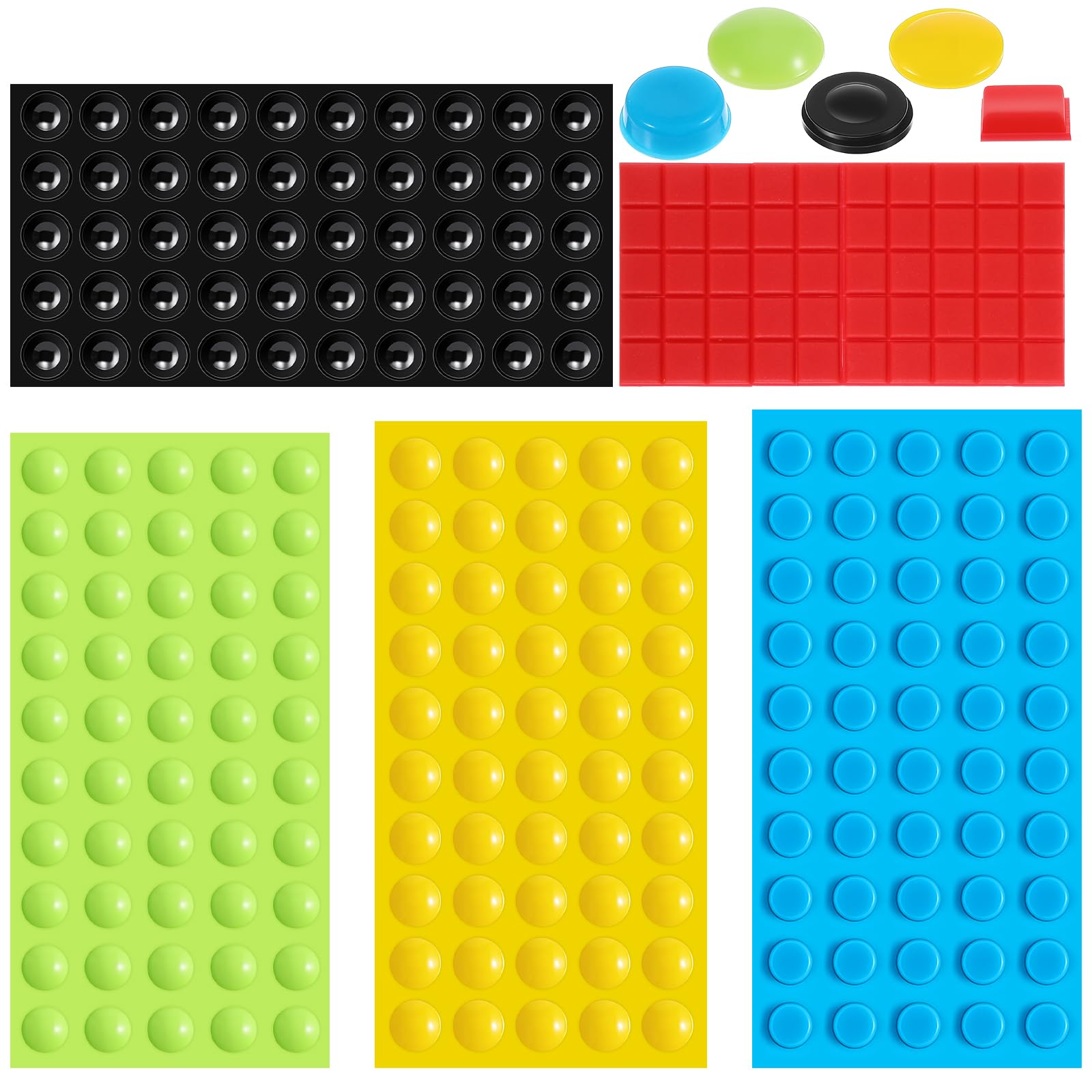
The verdict: If you buy one thing first, buy this. A pack of bump dots turns a flat, silent microwave keypad, oven panel, or washing machine into something your fingers can read — for under ten dollars and an afternoon of sticking.
Bump dots are small self-adhesive raised shapes — dots, squares, bars, in several sizes — that you stick onto buttons and dials. Sellers rarely explain the part that actually matters: the system. Pick one shape for “start,” a different shape for “stop/cancel,” a bar for the setting you use most, and use the same code on every appliance in the house. Within a week your fingers stop hunting. The classic specialty brand is Hi-Mark, sold by blind-aid stores for decades; on Amazon, the bestseller is the BLEWAY 165-piece combo pack, and the GorillaGrit 106-piece pack is made in the USA with far more reviews behind it. But bump dots are only one tool in the marking drawer — further down this page you’ll find the rest: silicone dots, puff paint, felt pads, Velcro dots, and the free options, with an honest word on which one wins for which job.
The blind-specific details
| Works without sight | Completely — the product is touch. Nothing to read, charge, or connect. |
|---|---|
| Setup without sighted help | Yes for finding and marking buttons you can already locate by touch. For a first pass over a brand-new appliance, a sighted helper or a video call with a volunteer can confirm which flat button is which before you mark it. |
| Controls you can feel | That’s the whole product. Combo packs mix shapes and sizes, so different controls feel different. |
| Watch out for | Adhesive gives up on surfaces that get hot, wet, or greasy — re-check dots on oven panels and dishwashers every few months, and keep spares. Clear dots exist if a sighted household member minds the look; the colored ones are easier for low vision. |
Beyond bump dots: every way to mark by touch
Bump dots are the right first buy, but they’re not the right answer for every surface. A dot that’s perfect on a microwave keypad is wrong on a sweater, useless on a round dial, and short-lived in a steamy bathroom. Vision rehabilitation teachers reach into a whole drawer of marking materials — here’s the drawer, with what each one is actually for.
Silicone adhesive dots — the softer, grippier cousin. Same peel-and-stick idea as bump dots, molded from soft silicone instead of hard plastic; hardware stores sell the identical thing as clear cabinet-door bumpers, usually in bigger bags for less money. The feel is slightly squishy and high-grip, and silicone shrugs off the kitchen moisture and bathroom steam that loosen ordinary adhesive. Best for: kitchen and bathroom surfaces, glass, cabinet doors, and anywhere a hard dot has popped off once already. The trade-offs: the softness makes very small dots harder to tell apart by shape, and the clear kind is invisible if you have low vision and want to see your marks too.
Stactiles — pre-printed symbols for the worst panels. Where bump dots are blank marks you assign meaning to, Stactiles are raised multi-layer vinyl stickers printed with the actual symbols — a Washing Machine sheet (24 laundry symbols) and a General Utility sheet (25 symbols) for flat-panel appliances, $15.95 a sheet at AT Guys. They’re the community’s standard workaround for a touchscreen washer: the panel stays flat, but the symbols your fingers need are physically there. Best for: laundry and kitchen appliances whose controls are printed icons rather than buttons. The trade-off is the set menu — you get the symbols they print, in their layout, so a panel whose controls fall in odd places may still need plain dots for the leftovers.
Loc dots — the keyboard specialist. Tiny clear dots made for one job: marking individual keys. One on the F and J keys deepens the little ridges already there; one on a remote’s 5 key or a phone keypad centers your hand instantly. They’re smaller and lower-profile than general bump dots, so they fit crowded keypads without swallowing the button. Sold by blind-aid stores for a few dollars a sheet. Best for: keyboards, calculators, remote number pads. Too small for appliance panels — that’s what their big cousins are for.
Puff paint (dimensional fabric paint) — the one you draw with. A squeeze-bottle paint — Tulip Dimensional is the common craft-store brand, a few dollars a bottle; blind-aid stores sell the same idea as a “dimensional marker,” and RNIB’s Tacti-Mark is a liquid plastic that sets hard — that dries into a raised line or dot you can feel. Drawing is the superpower no sticker has: a raised line around a washer dial, a stripe at 350 degrees on the oven knob, a dot on a clothing tag, your initial on your own mug. It flexes with fabric, so it’s the clothing answer — a dot on the inside tag survives the laundry that would destroy any sticker. Best for: dials (lines beat dots), clothing and fabric, curved or odd-shaped surfaces, and marks you want shaped like something — an arrow, a letter. Honest cons: it needs drying time — about two hours, longer for thick marks — and your first lines will be wobbly, so practice on cardboard. It can peel off slick glossy plastic, and it’s paint, so keep it off surfaces that get hot.
Felt pads — the soft option, with limits. The thick felt furniture pads from any hardware store are the gentlest marker there is: soft, quiet, impossible to mistake for a hard dot. That softness is also the problem — felt compresses flat over time, its edges catch and peel, the adhesive is weak, and water, grease, and heat all finish it quickly. Honest verdict: it’s the last choice for buttons and keypads. Where it earns its place is big, gentle landmarks — the edge of a tray that’s yours, a drawer pull, the one step or shelf edge you want to find without a hard knock. A few dollars for a large pack.
Hook-and-loop (Velcro) dots — two textures in one purchase. Every pack gives you two unmistakably different surfaces: the scratchy hook side and the soft loop side. That’s a ready-made two-symbol code — hook always means on/start, loop always means off/stop — with no shapes to memorize. The dots are thick, stick hard, and are sold everywhere for a few dollars. Vision rehab teachers use them on remotes and appliance controls for exactly this reason. Best for: TV remotes (one hook dot on power and you’ll never hit the wrong end in the dark), battery covers, containers you open by feel. Cons: they’re the thickest option on this page, and the hook side can snag knit fabrics — keep it off clothing.
The zero-dollar drawer — rubber bands, hair ties, and hot glue. Before you buy anything: a rubber band around a can or bottle is a code — one band for soup, two for beans, a hair tie for yours-versus-theirs — and it moves from can to can forever, free. A dab of hot glue makes a custom dot or line on almost anything for pennies; it peels cleanly off smooth plastic when you want it gone, which is either the feature or the flaw depending on the job, and like puff paint it stays away from heat. These are the oldest tricks in the blind household because they work.
Which marker for which job — the quick answer
| Microwave & oven keypads | Hard bump dots first — crisp and precise. If steam and grease keep killing the adhesive, switch that spot to a silicone dot. |
|---|---|
| Washer, dryer & oven dials | Puff paint: one raised line at your everyday setting. A bump bar from a combo pack is the sticker version of the same idea. |
| TV remote | A small silicone or hard dot on OK and volume — and a hook-side Velcro dot on power if you want one button nobody could mistake. |
| Keyboard & keypads | Loc dots, or the smallest clear dots in a combo pack. Anything bigger crowds the keys. |
| Clothing | Puff paint on the inside tag — it flexes and survives washing. Never felt or paper stickers; they die in the first laundry. |
| Cans & bottles in the pantry | Rubber bands for the free, movable code — or audio labels, covered on the PenFriend page, when you need the actual name spoken. |
| Bathroom & steam | Silicone dots. Moisture is what they’re built for. |
Where to get them: bump dot and silicone packs are on Amazon and in hardware stores (check the cabinet-hardware aisle for the bumper version of the same product); puff paint lives in craft stores and the craft aisle of big-box stores; felt pads and Velcro dots are hardware-store staples; and blind-aid stores stock the specialty end — loc dots, touch dots, and dimensional marking paint — in one place.
- Price
- About $6 to $10 a pack. BLEWAY 165-piece combo: $8.99 on Amazon.
- Rating
- BLEWAY: 4.6 stars (298 reviews), listed #1 in Amazon’s “Braille Aids” category. GorillaGrit: 4.5 stars (1,485 reviews). Source: Amazon, via research index, October 2026.
- Power / app
- None. Peel, stick, done.
Ready to buy?
You’ve read the blind-specific part first — that’s the point of this page. The sellers are the exit:
target="_blank" rel="noopener", affiliate link
Blind-owner reviews
No reviews yet — write the first one. Every review is read by a human before it appears.